What Astellia 2 actually is
Astellia 2 is a free-to-play, cross-platform MMORPG that opened its servers on 5 November 2026. It is made by Lepor Games in Seoul, continues the world of the 2019 PC game Astellia, and runs on Windows and Android under one account, with iOS announced but not yet open.
The short version
| Question | Answer |
|---|---|
| Genre | 3D fantasy MMORPG, tab-target combat |
| Developer | Lepor Games (Seoul) |
| Korean service | NEXUS |
| Platforms | Windows PC, Android; iOS listed, no date |
| Price | Free, with in-app purchases |
| Launched | 5 November 2026 |
| Classes | Six: Knight, Berserker, Assassin, Archer, Scholar, Mage |
| Signature system | Astels — summoned companions |
| Blockchain layer | Yes, in the global version: ATRA and the ATRAx token |
What the sequel inherits
The first Astellia shipped in 2019 as a subscription-free PC MMORPG published by Nexon, built around the same idea: a class, a party, and a collection of summoned Astels that fight with you. Its Korean service closed in January 2020. The sequel keeps the name, the Astel concept and the six-class structure, and changes the delivery: it is built for phones first and runs on PC through a launcher.
That matters for two reasons. The class names and the Astel system will feel familiar if you played the original, and the platform shift explains most of the design choices that look odd on a desktop — the touch-friendly UI, the shorter session structure, the way the Colosseum and boss content is chunked.
The loop, as documented
The official site describes four pillars: class, Astel, boss content, and a competitive arena.
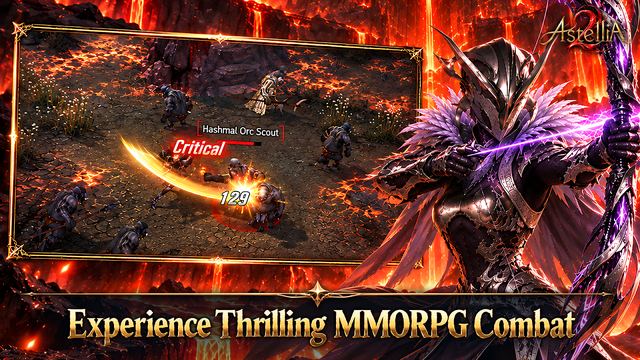
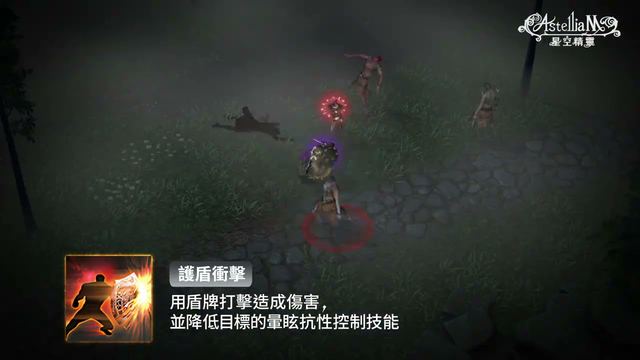
You level a class. Six classes, each with a weapon, a symbol and a stated weakness. Knight holds the front with a longsword and shield, Berserker swings a greatsword and gives up defence for pressure, Assassin works from stealth with twin blades, Archer debuffs from range, Scholar heals and shields with a staff, Mage throws elemental area damage from a grimoire.
You summon Astels. Companions are acquired and summoned, and the launch rewards include a guaranteed ticket for one named Astel, Papilla. The system is the series' identity: your character is half the party.
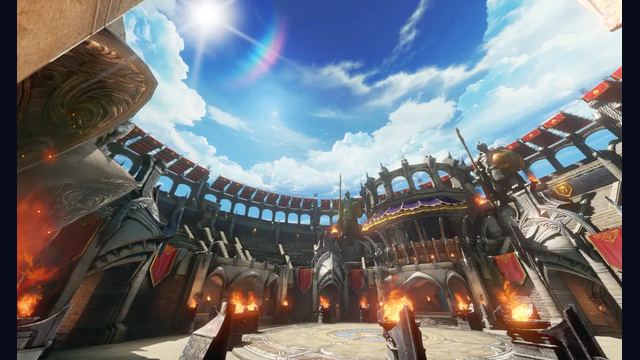
You fight bosses two ways. Boss Subjugation is cooperative — a group kills a boss and shares the result. Boss Contest is competitive — two teams enter, one boss, one winner. The Colosseum is where you fight other players directly, with a seasonal ranking attached to it.
You earn and spend. Gold is the ordinary currency. Diamonds come from the shop. Mileage is a secondary shop currency. ATRA is the in-game currency of the token system, and it can move to an on-chain token, ATRAx, with a five-minute cooldown on mint and burn.
What is not documented
This is a two-day-old launch, and the official material is thin in specific places. There are no published damage coefficients, no drop tables, no class tier data, and no confirmed server list. System requirements are described only as "Windows 10 or later", with full specs promised after optimisation.
The site treats those gaps as gaps. Where a page says something is announced but not detailed, that is a statement about the official material on 6 November 2026, not a guess dressed up as fact.
Is it an MMO or a gacha game?
Both, in the way modern mobile MMOs usually are. The core is a persistent world with classes, parties, bosses and a player arena. Around it sits a summon economy — Astels and avatars are summoned, and the shop sells random items. The launch reward list is a good illustration: it includes a class selection avatar summon ticket and a guaranteed Astel summon ticket, which tells you exactly what the game expects you to collect.
That is not automatically bad. It does mean the honest advice is to treat the first week as an evaluation: play the free content, see whether the summon loop respects your time, and decide before the shop has a chance to argue.
How it compares to the obvious alternatives
If you want a story-heavy single-player RPG, this is not it — Astellia 2 is a social, repeatable-content game. If you want a desktop-first MMO with a raid scene, the PC client works but the design is mobile-shaped. If you played the original Astellia, the sequel is recognisably the same world with a different economic model bolted on.
The genre neighbours are other Korean cross-platform MMOs rather than console RPGs, and the comparison that matters most is with its own predecessor — covered in Astellia 2 vs the original.
What to read next
- Launch status — what is live, store by store.
- All six classes — the official role of each, in one table.
- Astels and companions — the system that defines the series.
- Tokenomics — what ATRA is, and what is still undecided.
What it costs to start
Free is not the same as cheap, and the distinction is worth stating before you install.
Download and play: no cost, on both platforms.
The shop: Diamonds, Mileage and a cash shop with random items, disclosed on the Google Play listing. The pre-registration package handed out enough free summons that the shop is optional for the first weeks.
The token: optional, and not even reachable until 19 November. Nothing in the published material ties progression to a wallet.
Time: the real cost. It is a live-service MMO with daily-shaped content, and the first week is designed to be sticky.
The honest framing for a new player is that Astellia 2 asks for time and offers to sell you shortcuts. Whether that trade is fair depends on how much you enjoy the loop, which is why the currencies page exists.
All figures on this page were checked against the official Astellia 2 site and the Google Play listing on 6 November 2026.