Where players fight each other
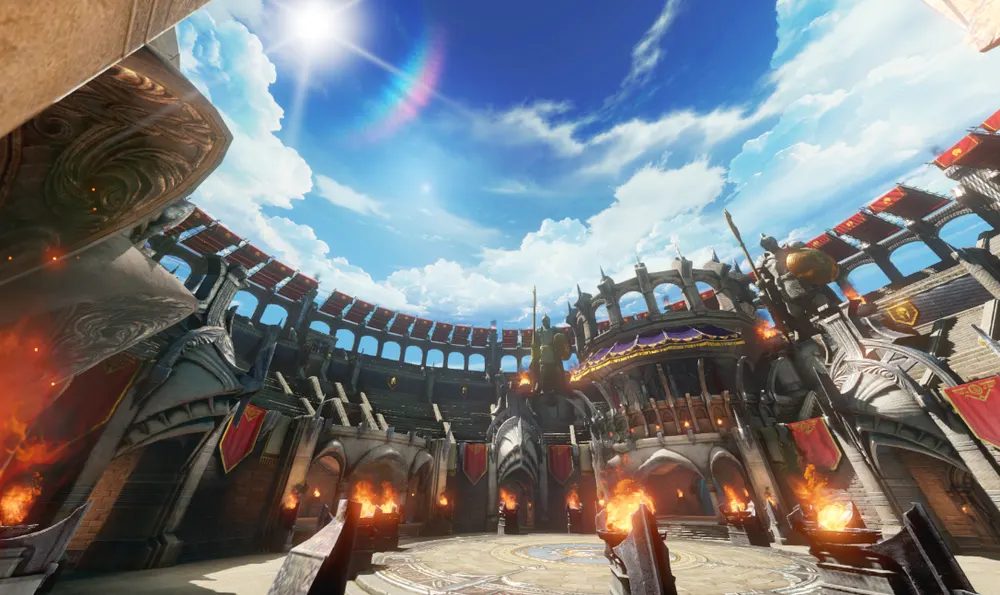
The Colosseum is Astellia 2's player-versus-player arena, and it is wired into the reward economy through a seasonal ranking. It is also the mode where the class descriptions matter most, because every weakness listed on the class page becomes something an opponent can attack.
What the official material establishes
| Element | What is confirmed |
|---|---|
| Mode name | Colosseum |
| Format | Player versus player |
| Progression | Seasonal ranking |
| Reward link | Ranking feeds the Atra Ranking reward track |
| Related currency | ATRA, with an on-chain counterpart ATRAx |
That is the documented skeleton. There is no published bracket structure, no matchmaking description, no season length, no reward table.
How the ranking connects to rewards
The tokenomics page describes a loop: gameplay and Atra Pass missions feed an Atra Ranking, which feeds ATRA, the in-game currency, which can convert to ATRAx on-chain. The Colosseum is the competitive half of that loop — it is where ranking is earned against other players rather than against the world.
What that means practically: the Colosseum is not a side activity with cosmetic prizes. It is part of how the game's economy is meant to distribute value. Whether that makes it worth your time depends on numbers the developer has not published.
Class matchups, from the official weaknesses
The class page states a weakness for each class. In PvP those weaknesses are the matchup chart. Read them as design statements, not as a tier list:
| Class | Stated weakness | What an opponent does with it |
|---|---|---|
| Knight | Low mobility, low damage | Kite it, ignore it, kill its team first |
| Berserker | Low defence | Trade into it early, before it ramps |
| Assassin | Low defence | Force it to commit, then punish |
| Archer | Vulnerable when closed on | Close the distance |
| Scholar | Low attack power | Pressure it and win on attrition |
| Mage | Low defence | Interrupt or burst before it casts |
This is where the Assassin earns its place: stealth plus burst is the profile that decides a duel, and the low defence only matters if the opponent survives the opener.
The three rules that travel
Distance is a resource. Archer and Mage both lose when something reaches them; Knight and Berserker both lose when something refuses to. Whoever controls distance controls the fight.
A stun is a tempo tool. The Knight's stun is described as a defensive ability, but in PvP a stun is also how you convert a window — the same logic that makes it valuable in Boss Contest.
Do not queue on tilt. There is no published rating protection, and a seasonal ranking means the ladder resets the value of your early losses.
What is missing
No season dates. No reward tiers. No matchmaking rules. No confirmation of whether gear normalises in the arena. No published ban policy for win-trading.
For a mode that is part of the reward economy, that is a lot of blank space, and it is the honest state of the game on 6 November 2026. Pages that give you a Colosseum tier list right now are inventing it.
If you want to compete seriously
The boring answers are the correct ones at this stage:
- Pick a class for its weakness, not its strength. You will be playing around the weakness in every match.
- Learn one combo per class you meet. Six classes is a small roster; knowing what each opener looks like is most of the defence.
- Record your losses. With no published matchmaking rules, your own notes are the only reliable dataset.
- Wait for the first balance patch before investing in gear for PvP. A two-day-old build will move.
Colosseum versus boss modes
Boss Subjugation and Boss Contest are covered in boss modes. The Colosseum differs in one important way: in boss content the enemy is predictable, and in the Colosseum it is not. That is why the class weaknesses matter more here than anywhere else in the game.
The summary
The Colosseum is real, ranked, seasonal and economically connected — and almost entirely undocumented beyond that. Play it for the fights, treat the ladder as provisional until the first season is described, and do not let a stranger's tier list decide your class.
What the Colosseum shares with the rest of the game
Three systems touch the arena, and knowing which is which prevents a lot of wasted effort.
Boss Contest is not the Colosseum. Contest is two teams competing over a boss; the Colosseum is players against players with no boss in the room. Different builds, different failure modes.
The Atra Pass feeds ranking. The tokenomics page describes missions and ranking feeding ATRA. If the Colosseum is where ranking is earned, then arena time is also currency time — which is why the mode matters beyond pride.
Class weaknesses are the matchup chart. There is no published PvP tuning separate from PvE, so the six official weaknesses are the best available guide to what beats what.
The first ten matches
With no published matchmaking rules, the only reliable way to learn the arena is to treat the first ten matches as data collection rather than competition.
Log three things per match: the class you faced, what hit you first, and whether you had a cooldown left when it did. That is enough to build a personal matchup sheet — six classes, three notes each — and it will be more accurate than any tier list published this week, because it is about your build and your reflexes.
The pattern usually appears by match six: one class you beat comfortably, one that beats you comfortably, and four coin flips.
Sources: official contents page and tokenomics page, checked 6 November 2026.