The loop: quests, Astels, gear
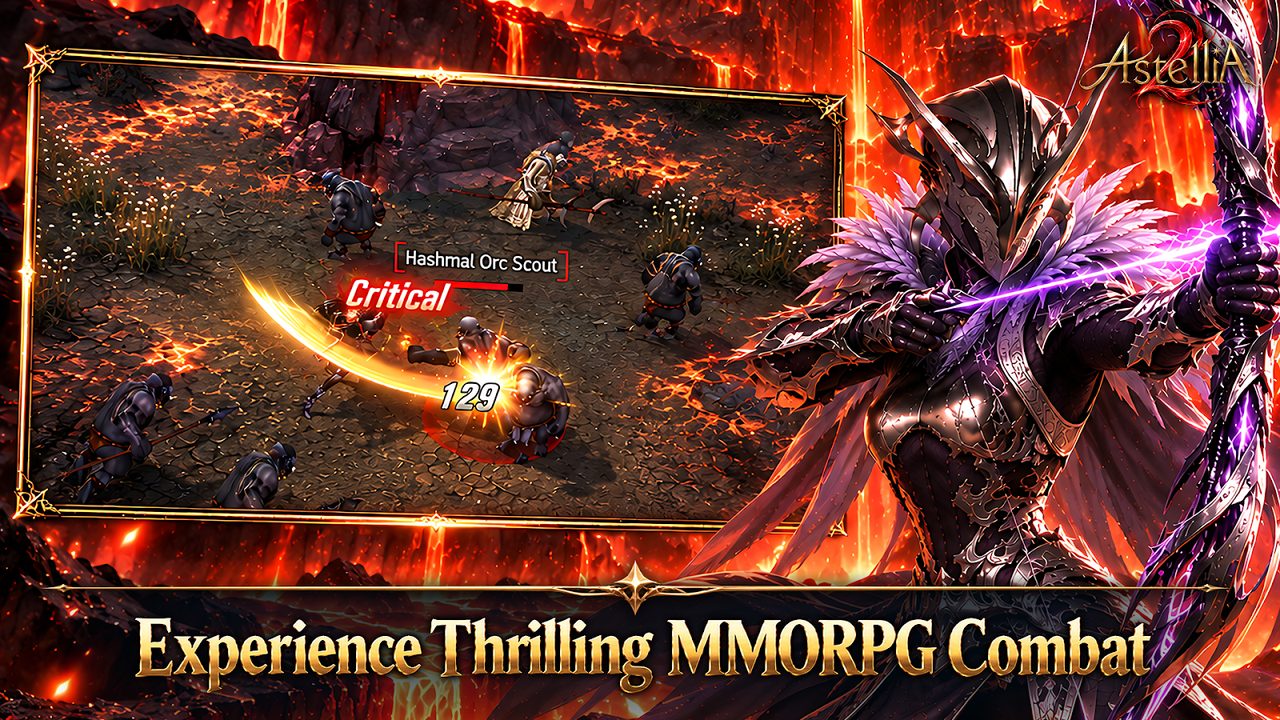
Astellia 2 is a tab-target MMORPG: you select a target, your character executes abilities, and the skill is in timing, positioning and knowing which ability to spend. This page covers the combat and progression loop as far as the official material documents it, and marks the rest as open.
The combat model
| Element | What is documented |
|---|---|
| Targeting | Tab-target, per class abilities |
| Roles | Tank, melee damage, ranged damage, support |
| Companions | Astels fight alongside you |
| Group size | Not published |
| Skill system | Class abilities; no published tree |
The class page describes abilities in role terms rather than numbers: the Knight's stun and strengthening, the Archer's debuffs, the Scholar's heals and shields, the Mage's elemental area damage. Those four are the mechanical hooks the rest of the game is built on.
What a fight looks like
A typical group encounter, assembled from the documented roles:
- The Knight engages and stuns. Control is the tank's contribution; damage is explicitly not.
- The Archer applies debuffs. The class is described as compensating for low durability with debuff effects, which makes it a force multiplier rather than a damage race.
- The Mage and Berserker convert. Area damage and pressure damage respectively, both with low defence as the stated cost.
- The Scholar keeps the line alive. Healing and shielding, with the lowest attack power of the six.
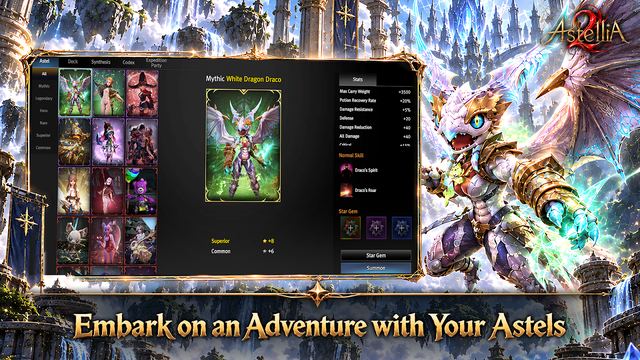
- The Astel adds a seventh body. An extra combatant the developer treats as core rather than cosmetic.
That is a standard trinity with a companion bolted on, and the companion is what makes the game feel different.
Progression, as documented
The economy pages name three systems that matter for growth: enhancement, crafting and the market. They appear as in-game uses for ATRA, and they are the only progression systems the developer has described by name.
Beyond that:
- Levels exist — the game is an MMORPG with story quests — but no level cap is published.
- Growth items exist — the pre-registration rewards include a Superior Growth Scroll and a Combat Awakening Scroll, both account-bound.
- Gear enhancement exists — named in the tokenomics page.
- Astel progression is undocumented. Whether companions level, evolve or combine is not stated.
The efficient first week
Without published numbers, the useful advice is about order rather than optimisation.
Finish the story content before you optimise. Story quests are the cheapest source of levels and currency, and they unlock systems in a fixed order.
Enhance what you have, not what you want. Enhancement is named as an in-game use for ATRA; spending it on a temporary weapon is how new players waste a currency they cannot yet value.
Use the free growth scrolls early. Account-bound growth items are worth more the earlier they are used, because the content they unlock compounds.
Do not buy gear. With no published stat curves and a first balance patch pending, purchase decisions are guesses.
What the shop changes, and what it does not
The shop sells growth items and summons. It does not appear to sell power directly — the reward list suggests scrolls and tickets rather than stat boosts. That is a meaningful distinction for anyone worried about pay-to-win.
It also does not change the combat model. A player who understands stun timing beats a player who bought a scroll, in the same way that in every MMO with a gear treadmill.
Progression questions with no published answer
- What is the level cap? Not published.
- Is there a skill tree or fixed abilities? Not described.
- Do Astels level with you? Not documented.
- Is there gear trading? A market is named, contents unpublished.
- Are there daily or weekly lockouts? Not published.
This page will grow as those are answered. Filling them with plausible numbers would make it useless.
Combat in PvP versus PvE
The Colosseum changes what matters: control and burst beat sustain, and a class's stated weakness becomes the thing an opponent attacks. The Colosseum page covers the matchup logic; the boss modes page covers the cooperative version.
The summary
Tab-target combat, six roles with stated weaknesses, Astels as a seventh body, and three named progression systems — enhancement, crafting, market — with almost no published numbers behind them. Play the story, spend growth items early, and treat optimisation as a post-patch activity.
The three progression systems, named
The tokenomics page names exactly three in-game uses for ATRA: enhancement, crafting and the market. That is the most concrete statement about progression the developer has published, and it is worth unpacking.
Enhancement implies gear upgrades with a currency sink — the classic Korean MMO pattern, where a piece of gear is improved repeatedly and the cost rises each time.
Crafting implies materials and recipes, which in turn implies gathering content.
A market implies player-to-player trade, which is how most MMOs let a casual player convert time into currency.
None of the three is documented beyond the name. What they tell you is that Astellia 2 has a gear-centric endgame rather than a cosmetic one — which is consistent with the growth scrolls in the launch rewards.
Combat and progression statements checked against the official class, contents and tokenomics pages on 6 November 2026. The rest is patch notes away, and there are no patch notes yet.